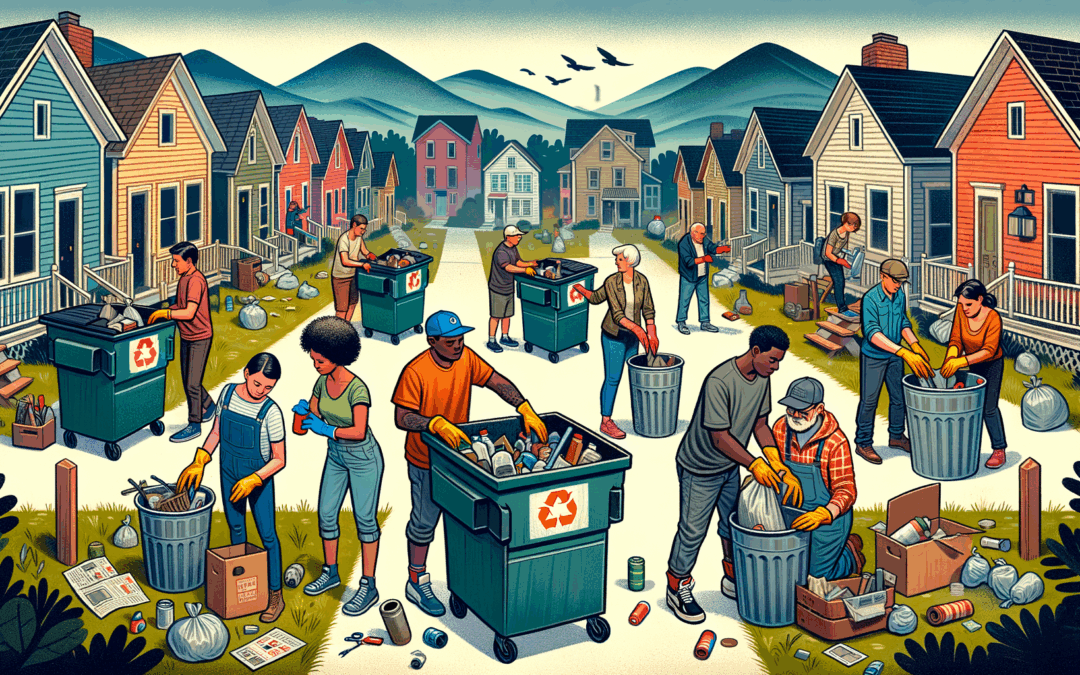
Community cleanups are becoming increasingly popular in Asheville and throughout Western North Carolina. As our mountain communities continue to grow, so does our collective responsibility to keep our neighborhoods beautiful. One smart approach that’s gaining traction among Asheville residents is sharing dumpster rental costs with neighbors for community cleanup projects. This collaborative approach not only saves money but strengthens community bonds in our unique mountain landscape.
Here in Asheville, we’ve seen firsthand how neighborhood cleanup initiatives transform spaces and build community. From the historic streets of Montford to the winding roads of Fairview, residents are coming together to tackle everything from storm debris to seasonal yard waste. As a family-owned dumpster rental service based right here in Fairview, we’ve helped coordinate dozens of shared dumpster projects across Buncombe County and beyond, giving us a unique perspective on what makes these community efforts successful. We’ve witnessed the power of collaboration, as neighbors bond over shared goals and take pride in their revitalized surroundings. Additionally, we’ve been able to share valuable poststorm waste disposal tips, ensuring that everyone can effectively manage the debris left behind after storms. These efforts not only beautify our neighborhoods but also foster a sense of responsibility and stewardship among residents.
The Benefits of Sharing a Dumpster in Asheville Neighborhoods
When neighbors pool resources for a dumpster rental, the advantages extend far beyond the obvious cost savings. Here’s why this approach makes particular sense in our Western North Carolina communities:
The most immediate benefit is financial. When you split a $299 10-yard dumpster between 5-6 households, each family might pay just $50-60—significantly less than if each household rented their own container or made multiple trips to the Buncombe County landfill, especially considering our mountain roads and fuel costs.
Beyond money, there’s the community-building aspect. Asheville has always had a strong sense of community, and shared cleanup projects strengthen these connections. Neighbors who might normally just wave hello end up working side by side, building relationships that last long after the dumpster is hauled away.
Environmental benefits are substantial too. By consolidating waste removal into a single dumpster, you’re reducing the carbon footprint of multiple individual trips to disposal facilities. This aligns perfectly with Asheville’s commitment to environmental stewardship and sustainability.
How to Organize a Shared Dumpster Project in Your Asheville Neighborhood
So how do you actually coordinate a shared dumpster project in your local Asheville community? Here’s a straightforward approach based on our experience working with neighborhoods across Western North Carolina:
Start by gauging interest. A simple conversation with immediate neighbors or a post on your neighborhood’s social media group can help determine if there’s enough interest. In tight-knit communities like Black Mountain or West Asheville, you might be surprised at how quickly people jump on board.
Once you have interested participants, decide on timing. In Asheville, spring and fall tend to be popular for community cleanups due to our moderate weather. Spring is ideal for clearing winter debris before the summer growing season, while fall works well for clearing leaves and preparing properties for winter.
Next, determine what size dumpster you’ll need based on the project scope. For a typical neighborhood cleanup involving 5-8 homes, a 13-yard dumpster often provides the right balance of capacity and cost-effectiveness. For smaller projects involving just 3-4 homes, a 10-yard might suffice.
When collecting money from neighbors, consider using a digital payment app for convenience and transparency. Establish clear contribution amounts upfront based on either equal shares or adjusted based on anticipated usage if some neighbors have significantly more or less to dispose of.
Setting Clear Guidelines for Your Neighborhood Cleanup
Clear communication is essential for any shared project, especially in close communities like ours. Before the dumpster arrives, make sure everyone understands:
Create a schedule that gives each household dedicated time with the dumpster. This works particularly well in neighborhoods with limited street access like those in North Asheville or Weaverville. A simple shared online calendar can help manage this efficiently.
Be explicit about what can and cannot be placed in the dumpster. Prohibited items include hazardous waste, electronics, and certain appliances. Remember that Asheville has specific regulations about waste disposal that all participants need to follow.
Establish a clear procedure for filling the dumpster. Suggest that larger items go in first with smaller items filling gaps to maximize space. This is especially important when sharing costs, as efficient loading means everyone gets fair value.
Appoint a primary contact person who will coordinate with the dumpster rental company. This person should be available when the dumpster is delivered and can help address any questions or issues that arise during the rental period.
Real Examples from Asheville Neighborhoods
We’ve seen numerous successful shared dumpster projects across Asheville that offer valuable lessons for anyone considering organizing one:
In Montford, a historic neighborhood known for its older homes and mature trees, residents coordinated a spring cleanup after winter storms left significant debris. Eight households shared a 15-yard dumpster, creating a rotation schedule that gave each home a three-hour window. The entire cleanup was completed over a weekend, with neighbors helping each other haul larger items. As the sun shone brightly, families not only cleared debris but also took the opportunity to declutter their homes, moving purge essentials for a fresh start. By the end of the weekend, the neighborhood felt transformed, with yards free of clutter and a renewed sense of community spirit. Eager conversations and laughter filled the air as neighbors shared stories and plans for future gatherings, fostering an even stronger bond among them.
Over in West Asheville, a group of first-time homebuyers on a single street pooled resources to clean up overgrown yards and dispose of materials left by previous owners. They opted for a 10-yard dumpster and combined the cleanup with a street cookout, turning a chore into a community-building event.
In Fairview, where our company is based, a rural community with larger properties coordinated a shared 13-yard dumpster for agricultural waste and old fencing materials. Since properties were spread out, they positioned the dumpster centrally and created a weekend-long schedule. The project was so successful they now make it a biannual tradition.
Navigating Potential Challenges
While shared dumpster projects usually go smoothly, it’s wise to anticipate potential issues:
Occasionally, someone might try to dispose of more than their fair share. Address this upfront by establishing clear guidelines about volume per household or consider having neighbors pay proportionally based on their estimated disposal needs.
Weather can be unpredictable in Western North Carolina. Have a contingency plan for rain or other adverse conditions, which might include extending the rental period or adjusting the schedule.
Sometimes neighbors might inadvertently include prohibited items. Create a simple handout listing what can and cannot go in the dumpster, and consider appointing someone to do a quick check periodically.
Street access can be challenging in some of Asheville’s older or more mountainous neighborhoods. Work with your rental provider to find the optimal dumpster placement that balances accessibility with minimal disruption.
Cost-Saving Strategies for Asheville Residents
Beyond the basic idea of sharing costs, there are additional ways to maximize value when renting a shared dumpster in Asheville:
Many dumpster rental companies, including ours, offer midweek discounts. If your neighborhood can coordinate a Tuesday-Thursday cleanup, you might secure additional savings.
Consider timing your cleanup to align with Asheville’s bulk waste collection schedule. You can use the dumpster for items not accepted by bulk collection, creating a comprehensive cleanup approach.
For neighborhoods with regular needs, ask about multi-rental discounts. If your community commits to quarterly or biannual cleanups, many local companies will offer reduced rates.
Don’t forget to explore whether any neighbors have trucks that can help transport items to the dumpster. This can be especially helpful for elderly residents or those with mobility limitations, ensuring everyone can participate fully.
Building Long-Term Community Through Shared Projects
What starts as a practical waste disposal solution often evolves into something more meaningful for Asheville neighborhoods. Many communities find that shared dumpster projects lead to other collaborative initiatives:
After successful cleanups, we’ve seen neighborhoods in areas like Arden and Fletcher establish regular community workdays that rotate between properties, helping each other with larger projects throughout the year.
Some neighborhoods have expanded their collaborative approach to include shared tool libraries, reducing the need for everyone to own rarely-used equipment like pressure washers or chainsaws.
In several cases, successful cleanup projects have inspired neighborhoods to take on beautification initiatives like community gardens or shared green spaces, especially in areas like Black Mountain and Candler.
The relationships built during these projects often lead to stronger neighborhood support networks, with residents checking on elderly neighbors during storms or helping newcomers connect with the community.
Getting Started in Your Neighborhood
Ready to organize a shared dumpster project in your Asheville neighborhood? Here’s a simple framework to get you started:
Draft a simple proposal outlining the project idea, potential dates, estimated costs, and expected benefits. This gives neighbors something concrete to respond to.
Use neighborhood directories, social media groups, or simply walk door-to-door to share your idea. Personal connections work particularly well in close-knit Asheville communities.
Once you have interest, host a brief meeting to discuss details and address questions. This could be at someone’s home or even at a local coffee shop or park.
After securing commitments, contact local dumpster rental companies to compare options. As a local provider, we’re happy to provide guidance specific to your neighborhood’s needs and circumstances.
From seasonal yard cleanup in Weaverville to renovation debris in South Asheville, shared dumpster rentals have become a smart solution for neighborhoods throughout our region. They align perfectly with Asheville’s community-oriented spirit and environmental values, creating benefits that extend far beyond waste removal.
By sharing costs, maximizing efficiency, and turning individual chores into community events, these collaborative projects exemplify the best of mountain living. Whether you’re in a historic downtown neighborhood or a rural community on Asheville’s outskirts, the shared dumpster approach offers practical, financial, and social benefits worth considering for your next cleanup project.
For more information about organizing a shared dumpster rental for your Asheville neighborhood, feel free to reach out to our team. As your neighbors in Fairview, we’re always happy to help communities across Western North Carolina find the waste management solutions that work best for their unique needs.