


Key Takeaways
Roofing debris is heavy, dense, and subject to specific weight limits that catch many homeowners off guard. Selecting the right dumpster size, understanding tonnage caps, and knowing which materials are accepted will prevent overage fees and project delays for any roofing job in Asheville and the surrounding Western North Carolina region.
- A 10-yard or 15-yard dumpster handles most single-story residential roof tear-offs; larger projects need a 20-yard or 30-yard container.
- Shingles, underlayment, roofing felt, flashing, and wood decking are all accepted roofing materials.
- Weight limits typically range from 1 to 3 tons depending on container size; shingles average 2 to 4 pounds per square foot, so weight adds up fast.
- Same-day or next-day delivery is often available across Buncombe, Henderson, Haywood, and Madison counties.
- Hazardous materials such as asbestos-containing shingles from homes built before 1980 require separate certified disposal and cannot go in a standard dumpster.
- Rental periods commonly run 7 to 14 days, with extension options available.
- Overfilling a dumpster above the rim is prohibited; overage weight fees apply per ton beyond the included limit.
Why Roofing Debris Disposal Needs a Plan Before the First Shingle Comes Off
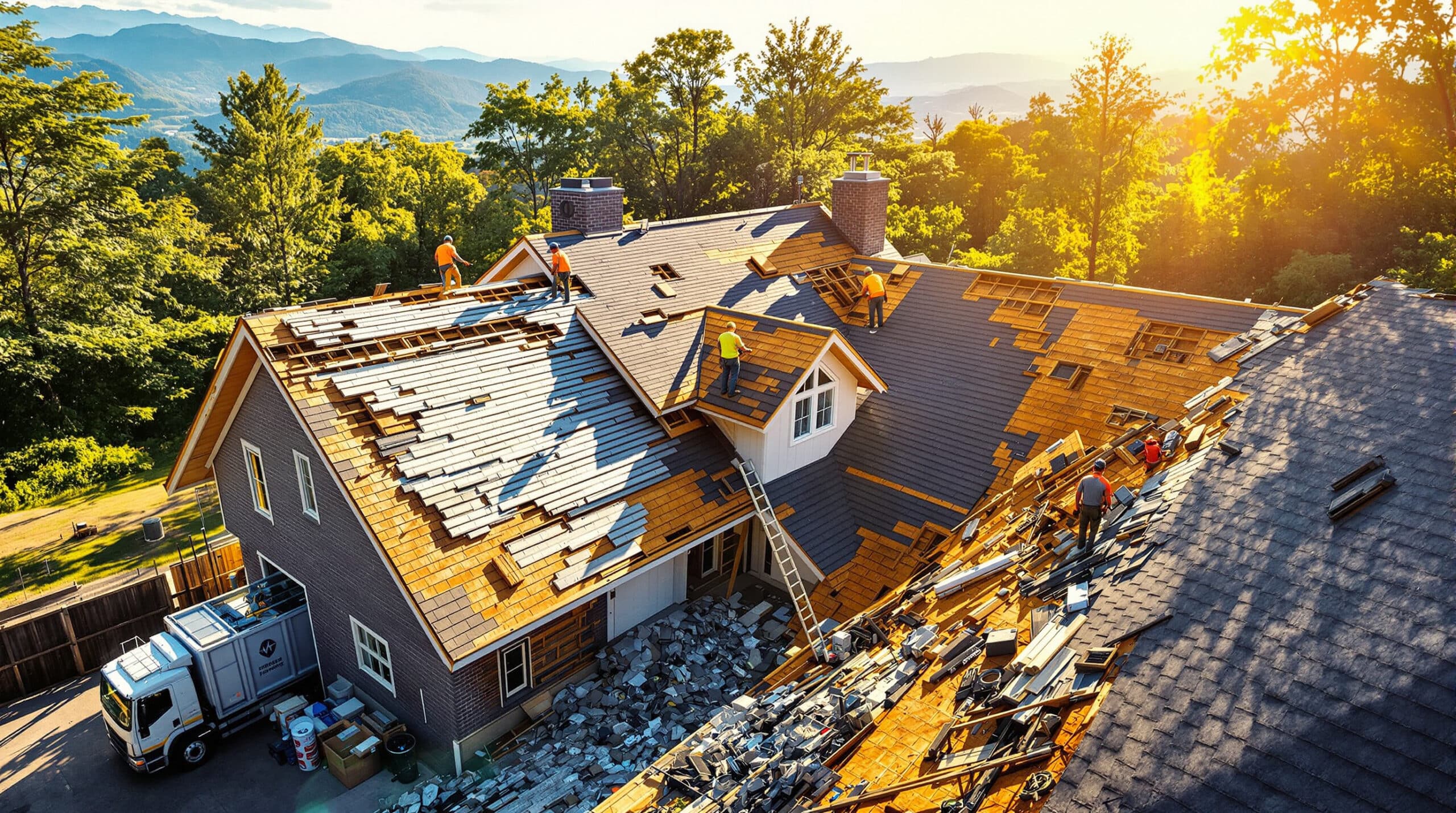
Dumpster rental for roofing debris disposal in Asheville NC works best when the container is on-site and sized correctly before the crew starts the tear-off, because shingles and underlayment pile up faster than most homeowners expect and delays cost money. A standard 2,000-square-foot residential roof can shed anywhere from 3 to 6 tons of material depending on the number of existing shingle layers, the pitch, and whether wood decking is being replaced. That weight figure is the single most important variable when choosing a dumpster, and it is the one most frequently underestimated.
Western North Carolina roofing projects come with regional factors that add complexity. Mountain weather moves fast, and contractors often want to complete a tear-off in a single day to avoid exposing the roof deck. That means all debris needs a landing spot immediately. Narrow roads and sloped driveways in areas like Weaverville, Fairview, and Candler can limit truck access, which affects which container sizes are practical for a given address. Planning ahead, rather than calling for a dumpster the morning of, gives everyone more options and avoids last-minute scrambling.
All in Dumpster Rentals serves homeowners and roofing contractors throughout Buncombe, Henderson, Haywood, and Madison counties and can walk customers through size selection, weight limits, and delivery logistics before a project begins. Knowing the square footage of the roof, the number of existing shingle layers, and whether decking replacement is involved gives the rental team enough information to match the right container to the job.
What Counts as Roofing Debris and What Gets Accepted in a Dumpster
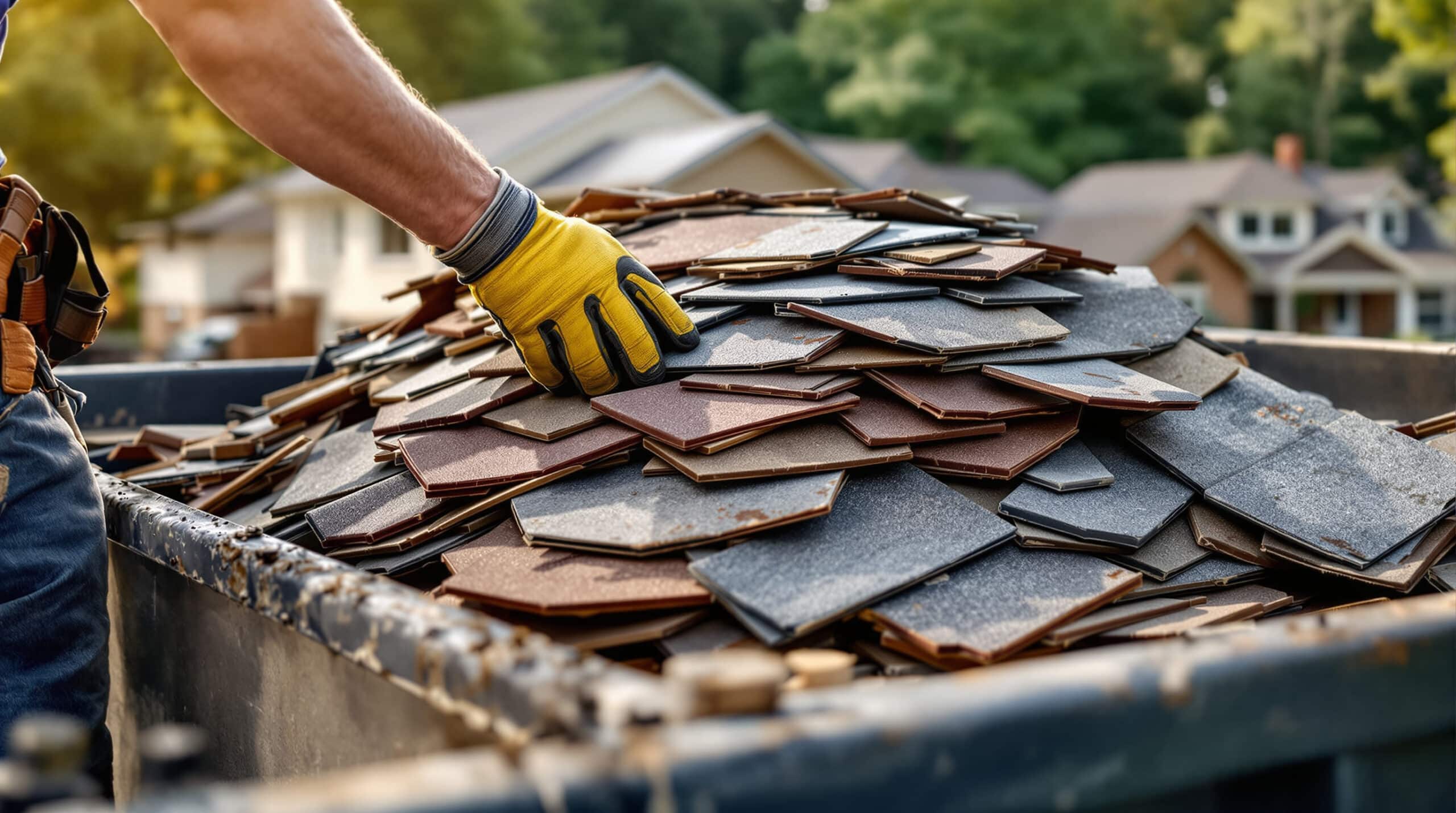
Standard roofing debris accepted in a roll-off dumpster includes asphalt shingles, architectural shingles, 3-tab shingles, roofing felt, synthetic underlayment, ice and water shield, ridge cap material, drip edge flashing, step flashing, pipe boot flashing, wood sheathing, OSB decking, plywood decking, and gutters. These materials are routinely handled in residential and commercial roofing tear-offs across the Asheville area and can go directly into a standard roll-off container.
Which roofing materials are not accepted in a standard dumpster?
Certain materials require separate handling regardless of how they look or feel. Asbestos-containing materials (ACM) are the most critical exclusion. Homes built before 1980 in North Carolina frequently used asbestos-reinforced roofing products including certain shingles, roofing tape, and felt underlayment. The U.S. Environmental Protection Agency and National Institutes of Health both provide guidance on asbestos hazards, and North Carolina Department of Environmental Quality requires certified abatement contractors to remove and dispose of ACM through licensed hazardous waste facilities. Placing asbestos materials in a standard dumpster is a legal violation with fines that can reach several thousand dollars per incident.
How do homeowners identify potentially hazardous roofing materials before calling for a dumpster?
The safest approach for any home built before 1980 is to hire a licensed asbestos inspector to take a sample before the tear-off begins. Testing costs roughly $25 to $75 per sample through a certified lab. If results come back negative, the project can proceed with a standard dumpster rental. If results are positive, a licensed abatement contractor must handle removal before any general construction dumpster is placed. Knowing this before the roofing crew arrives prevents work stoppages and protects everyone on-site. For a full rundown of what materials cannot go in a dumpster, the guide on what you cannot put in a dumpster in Asheville NC covers the complete prohibited list.
Can mixed loads go in the same container as roofing debris?
Yes, within limits. If a roofing project also involves some wood trim replacement, old gutters, or general construction waste, those materials can share the container as long as no prohibited items are mixed in. However, mixing heavy concrete or masonry materials with roofing debris can push a load past the weight limit quickly. Customers should mention mixed loads when booking so the rental company can advise on whether a larger or second container makes more sense financially.
Choosing the Right Dumpster Size for a Roofing Project
Container size selection for a roofing job comes down to two numbers: the roof’s total square footage and the number of existing shingle layers being removed. Matching these variables to the correct container prevents both an underfilled container that wastes money and an overfilled one that triggers additional fees or safety issues.
What size dumpster do I need for a single-story residential roof?
A single-story home with 1,500 to 2,500 square feet of roof surface and one existing shingle layer typically fits in a 10-yard container, which holds roughly 3 tons of roofing material. If the same home has two shingle layers, a 15-yard container is the safer choice because the weight per cubic foot of shingles is high enough that a 10-yard box can reach its weight limit before it reaches its volume limit. That distinction matters: dumpster capacity is limited by both volume (cubic yards) and weight (tons), and the weight cap often becomes the binding constraint with roofing debris.
What size dumpster is right for larger residential or commercial roofs?
A home with 2,500 to 4,000 square feet of roof surface, or any commercial flat roof replacement, generally needs a 20-yard container. Projects involving full decking replacement in addition to multiple shingle layers, or roofing jobs combined with fascia board and soffit replacement, frequently require a 30-yard container. As a general reference point, one roofing square (100 square feet) of architectural shingles weighs approximately 250 to 400 pounds. A 3,000-square-foot roof equals 30 squares, which translates to 3.75 to 6 tons of shingle weight alone before factoring in underlayment or decking.
Is it ever smarter to rent two smaller dumpsters instead of one large one?
Sometimes, yes. If a driveway is steep, narrow, or has a low-clearance overhang, a large roll-off truck may not be able to position a 30-yard container safely. In those cases, two 15-yard containers staged in different locations can be more practical. This approach also works well for multi-day roofing projects where the crew wants to clear debris in stages rather than piling everything at the end. Discussing site access details when booking helps identify the best configuration before delivery day.
Understanding Weight Limits and Overage Fees for Roofing Debris
Weight limits are one of the most important factors in dumpster rental pricing for roofing work, and they are frequently misunderstood by first-time renters. Every roll-off container rental includes a base weight allowance measured in tons. Going over that allowance triggers per-ton overage fees that can add significantly to the final invoice.
What are typical weight limits for dumpsters rented for roofing?
Weight allowances vary by container size and rental company pricing structure. As a general market reference, 10-yard containers often include 1 to 2 tons, 15-yard containers include 1.5 to 2.5 tons, 20-yard containers include 2 to 3 tons, and 30-yard containers may include 3 to 4 tons. Overage fees typically run $50 to $100 per additional ton. For roofing projects, where material density is high, customers should always ask specifically about the weight limit included in their rental agreement before signing, because a load that looks half-full visually can already be at its weight limit.
How do I estimate the weight of my roofing debris before renting?
A practical estimation method: count the number of roofing squares (each 100 square feet of roof area equals one square), multiply by the weight per square of the material being removed, and add 20 percent for underlayment and fasteners. For reference, standard asphalt shingles average 250 to 350 pounds per square, while architectural shingles run 350 to 400 pounds per square. A safe roofing project always accounts for the full debris weight upfront to avoid surprises at final billing.