


Key Takeaways
After a storm hits Buncombe County, getting the right roll-off dumpster on your property fast makes the difference between a manageable cleanup and weeks of chaos. Most residential storm cleanups need a 20-yard or 30-yard dumpster. Accepted debris includes fallen limbs, damaged roofing shingles, siding, drywall, insulation, and broken fencing. Hazardous materials like asbestos and chemicals require separate disposal. Scheduling delivery quickly and loading the dumpster correctly keeps your project moving on time and on budget.
- A 20-yard dumpster handles most single-story roof or siding jobs; a 30-yard unit fits larger whole-property cleanups.
- Fallen tree limbs, storm-stripped shingles, gutters, siding, drywall, and broken fencing are all accepted debris types.
- Hazardous materials such as asbestos-containing roofing, paint, chemicals, and batteries cannot go in a roll-off.
- Flat, solid ground and a 10-foot clearance overhead are the two most important dumpster placement rules.
- Rental periods in this area typically run 7 to 14 days, with extensions available if cleanup runs long.
- Permits may be required when placing a dumpster on a public street in Buncombe County, so check local rules before delivery.
- Loading heavy debris on the bottom and distributing weight evenly prevents overfill issues and extra fees.
What Buncombe County Homeowners Need to Know About Storm Cleanup Dumpsters
Storm damage cleanup dumpster rental in Buncombe County gives homeowners a single, practical container to collect the debris that a severe storm leaves behind. After a major wind event, ice storm, or heavy rain, properties across Buncombe County can accumulate hundreds of cubic yards of broken material in a single afternoon. Fallen trees, stripped roof shingles, water-damaged drywall, ruined insulation, and splintered fencing all need somewhere to go, and a roll-off dumpster is the most efficient answer available to most households and contractors in this region.
Western North Carolina’s mountain terrain creates unique storm patterns. Storms that move through the Blue Ridge often bring powerful downdrafts and falling ice that snap large hardwood limbs and peel roofing materials faster than storms in flatter regions. For information on storm preparedness and safety, see CDC emergency preparedness resources. That means cleanup here tends to generate bulkier, heavier debris loads than homeowners expect. Knowing what size dumpster to order, what you can and cannot put inside it, and how to load it correctly saves both time and money. This guide focuses tightly on the dumpster rental decision itself, from choosing the right container size to scheduling delivery and pickup through All in Dumpster Rentals, a locally operated service covering Buncombe County and the surrounding area.
Choosing the Right Dumpster Size for Storm Debris in Buncombe County
Selecting the correct dumpster size before delivery is the single most important decision in any storm cleanup dumpster rental in Buncombe County. Order too small and you pay for a second haul; order too large and you pay for unused space. Most residential storm jobs fall into one of three size categories based on the scope of damage.
What size dumpster do I need for fallen tree debris?
Fallen tree limbs and branch debris compact poorly because of their irregular shapes. A single large hardwood tree dropped by a storm can fill a 10-yard dumpster entirely on its own when branches are not cut down. For one or two downed trees with limbs still attached, a 20-yard dumpster is a practical starting point. If you are clearing three or more large trees or dealing with a full trunk removal (minus the stump), a 30-yard unit gives you the room you need without a second pickup.
What size dumpster fits a roof or siding replacement job?
Roofing debris runs heavy. A standard asphalt shingle roof on a 1,500-square-foot home generates roughly 2 to 3 tons of material when a full tear-off is required. A 20-yard dumpster holds approximately 4 tons of roofing material, making it the right fit for most single-story homes. Two-story homes or homes with steep-pitch roofs often generate more volume and weight, putting them in the 30-yard range. Storm-damaged siding adds additional weight but less volume, so a combined roof-and-siding job on a mid-size home typically stays within a 30-yard container.
How much debris fits in a 10-yard versus 30-yard dumpster?
A 10-yard dumpster holds roughly 3 pickup truck loads of debris, which makes it a reasonable choice for minor wind damage like a few broken fence sections or a small section of blown-off soffit. A 20-yard container holds approximately 6 pickup truck loads and covers most moderate storm jobs. A 30-yard container holds about 9 pickup truck loads and is the standard choice for whole-property cleanups involving roof damage, multiple downed trees, and water-damaged interior materials all at once. Weight limits typically run between 2 and 6 tons depending on the container, and exceeding those limits triggers overage charges that can add $75 to $150 per ton.
What Storm Debris Is Accepted in a Roll-Off Dumpster
Knowing exactly what materials go into a storm cleanup dumpster saves homeowners from rejected loads, extra fees, and delays. Most organic and structural debris generated by a storm is accepted without restriction, but a small category of materials requires separate handling.
Can I throw fallen tree limbs and branches in a dumpster?
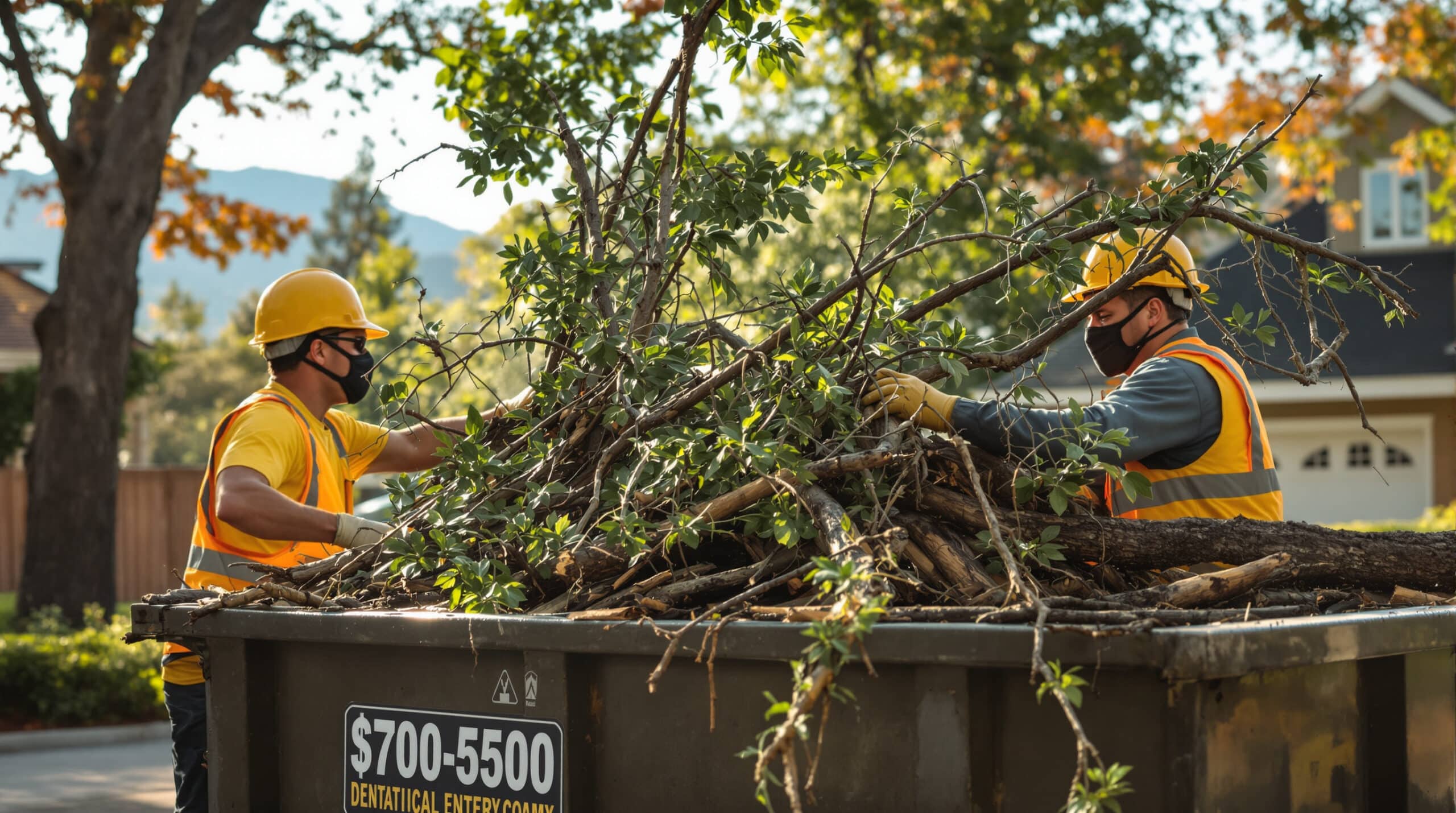
Yes. Fallen limbs, branches, leaves, and brush from storm damage are among the most common materials placed in roll-off dumpsters after a storm event. The practical tip here is cutting limbs into manageable lengths, ideally under 4 feet, before loading them. Long, unsplit branches bridge across the container walls and waste vertical space, reducing the effective capacity you paid for by as much as 30 percent. Stacking shorter cut pieces flat allows for denser loading and more debris per haul.
Is storm-damaged roofing, siding, and drywall allowed in a dumpster?
Asphalt shingles, metal roofing panels, wood shingles, composite siding, vinyl siding, aluminum gutters, plywood sheathing, drywall, and fiberglass insulation are all accepted in a standard roll-off dumpster. These materials make up the majority of storm debris on most Buncombe County properties. One important note: drywall that has been water-saturated for more than 48 hours begins to grow mold. While moldy drywall is still accepted in most roll-offs as construction debris, bagging it in heavy plastic reduces contamination risk for your crew during loading.
What materials cannot go in a storm cleanup dumpster?
Hazardous materials are prohibited in roll-off dumpsters regardless of how they ended up as debris. These include asbestos-containing roofing or siding materials (common in homes built before 1980), lead paint, household chemicals, motor oil, propane tanks, batteries, and electronic waste. Asbestos is the most critical concern in Buncombe County’s older housing stock. Homes built before 1978 should have roofing and siding materials tested before a tear-off. For regulations regarding hazardous materials disposal, consult the EPA guidelines on hazardous waste. Asbestos abatement requires a licensed contractor and separate disposal under North Carolina Department of Environmental Quality regulations. Mixing prohibited materials with standard debris can result in the entire load being rejected at the disposal facility.
How to Load a Storm Cleanup Dumpster Efficiently and Safely
Loading a roll-off dumpster the right way is not just about fitting more in. It also affects safety during loading and prevents overfill violations that can delay pickup. A systematic approach saves time and reduces the risk of injury when handling heavy debris. For workplace safety guidelines related to heavy lifting and debris handling, refer to OSHA safety standards.
What should I load first into a storm cleanup dumpster?
Heavy, flat materials go in first. Storm-stripped shingles, broken concrete walkway sections, waterlogged drywall sheets, and sections of solid lumber should be placed on the bottom of the container. This lowers the center of gravity, prevents the container from becoming top-heavy, and creates a stable base for bulkier, lighter materials on top. Placing large roofing sheets flat rather than at an angle also reduces wasted air space significantly.
How do I safely load heavy tree limbs without injuring myself?
Tree limbs from storm damage are unpredictable in weight. A 6-inch diameter oak limb that is 4 feet long can weigh 60 to 80 pounds. Always use gloves and steel-toed boots when loading storm debris. Work with a second person when carrying anything over 50 pounds. Use the dumpster’s walk-in door at the rear when available, rather than lifting debris over the side wall. Most roll-off containers have a swing door at one end at ground level. Opening that door and walking debris in on a ramp or plywood sheet reduces lifting strain and speeds up loading considerably.
What does a full dumpster look like and when should I stop loading?
Debris must stay at or below the top rail of the container walls. Anything that extends above the rim creates a legal road hazard when the truck transports the container and will result in the driver refusing pickup until the load is reduced. A good visual rule is the debris line sitting even with or just below the container walls on all sides.