

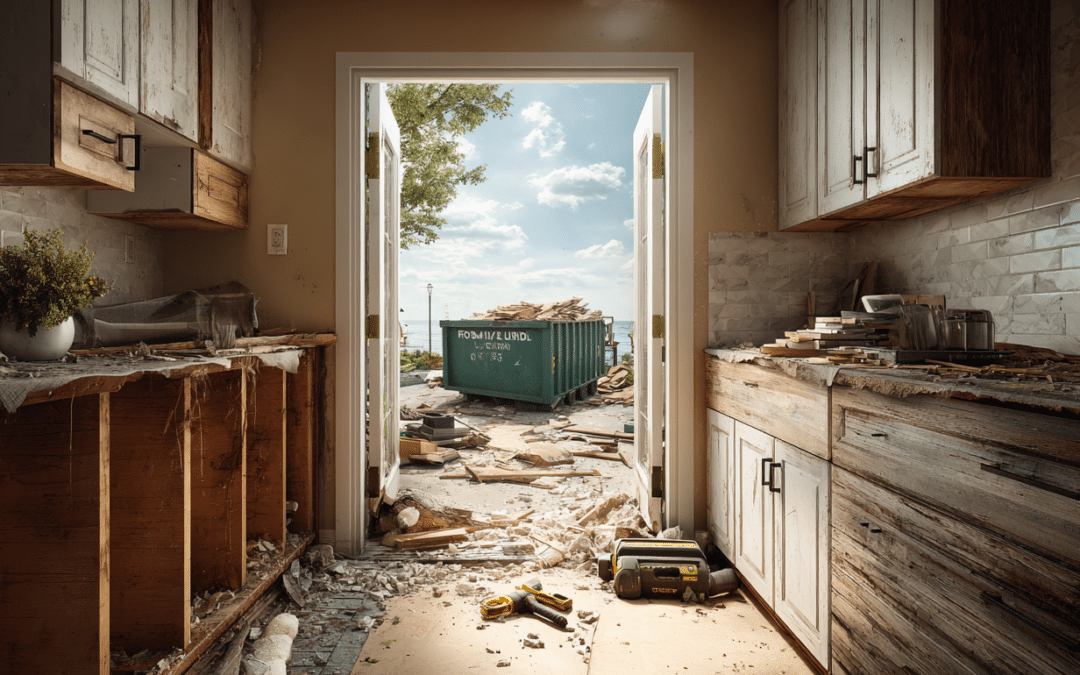
Planning Your Asheville Kitchen Remodel? Don’t Forget the Dumpster
There’s something about a kitchen remodel that turns even the most experienced homeowner into a wide-eyed planner. You start with a Pinterest board full of dreamy backsplashes and quartz countertops, you nail down a contractor, and then you tear into the old cabinets and realize, with sudden clarity, that this project is going to generate a lot of waste. Old plywood, broken tile, twisted ductwork, the particle board carcasses of cabinets that lasted three decades. It piles up faster than anyone expects, and unless you’ve planned for it, the mess can stop your project cold.
At All-In Dumpster Rentals, we’ve worked with Asheville homeowners and contractors on kitchen remodels of every size, from quick refreshes to full studs-out rebuilds. The pattern we see again and again is the same: the renovation itself goes about as planned, but the waste removal is where projects get bogged down if it wasn’t thought through up front. So before you swing the first sledgehammer, let’s walk through what a smart dumpster plan looks like for a kitchen remodel.
Why Kitchens Are Surprisingly Big Waste Generators
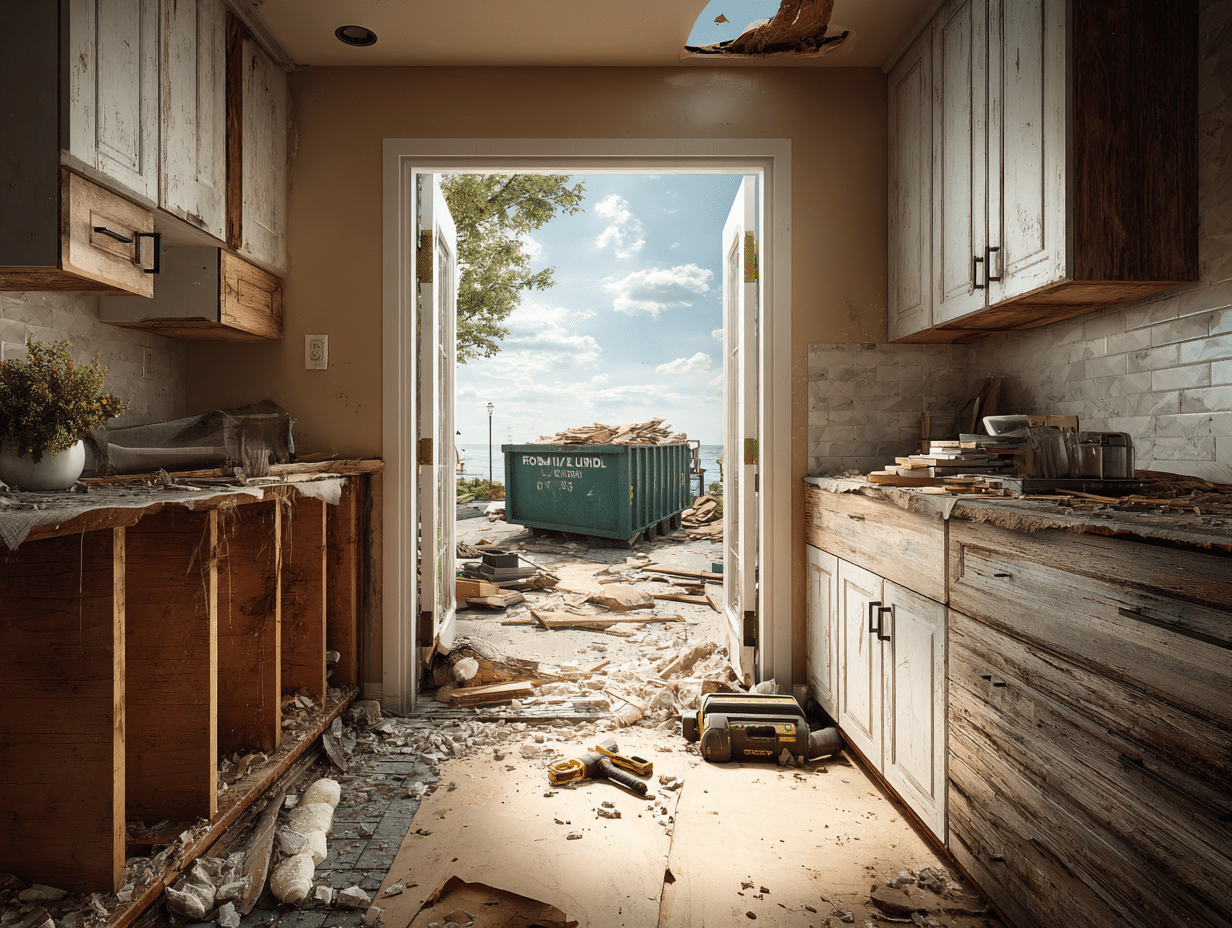
Kitchens look small on the floor plan. Three hundred square feet, maybe a little more. So how does a single room manage to fill a dumpster on its own? The answer is that kitchens are stacked. Floor, subfloor, cabinet bases, cabinet uppers, countertops, backsplash tile, drywall, ceiling, appliances, lighting, fixtures. When you peel back even one layer, you discover materials underneath that also need to come out.
Add in the fact that older Asheville homes often have surprises behind the walls (knob-and-tube wiring, lath and plaster, ductwork that doesn’t match any modern standard), and you can see why kitchen demolition produces more material than the square footage would suggest.
Estimating What You’ll Generate
A good rule of thumb is that a partial kitchen remodel, where you’re keeping the cabinet boxes and updating surfaces, fits comfortably in a 10-yard dumpster. A full remodel that replaces cabinets, flooring, and drywall typically needs a 13 or 15-yard container, especially if you’re also disposing of an island or built-in pantry.
Variables that push the volume higher include:
- Hardwood or thick tile flooring being removed along with subfloor damage
- Multiple layers of past renovations (laminate over tile over linoleum, for instance)
- Walls being moved or opened up, which means drywall and framing in the dumpster
- Ceiling work that brings down old drywall and insulation
- Larger kitchens with extensive cabinetry or built-ins
If you’re not sure where you fall, give us a call. We’ve sized hundreds of kitchen projects and we can usually get you close after a quick conversation.
Timing the Dumpster With Your Demolition
Most kitchen remodels happen in distinct phases: demolition, infrastructure work, installation, and finishing. The bulk of your waste will come out during demolition, which usually takes one to three days for a residential kitchen. After that, the trickle slows considerably, with occasional waste from cabinet adjustments, tile cuts, or paint cans.
The smart move is to schedule the dumpster for the start of demolition and keep it on site through the early infrastructure phase. That gives you a centralized place to dispose of demolition debris and any surprises that come up when walls get opened. Once cabinets and flooring start going in, the waste stream slows down, and you can schedule pickup.
Materials We Can Take From Your Kitchen Project
We accept the bulk of what comes out of a typical kitchen remodel, including:
- Cabinetry and cabinet bases
- Countertops (laminate, butcher block, tile)
- Backsplash tile and grout
- Drywall and plaster
- Flooring (vinyl, tile, hardwood, laminate, subfloor)
- Light fixtures and non-electronic hardware
- Framing lumber and trim
- Insulation
Materials we cannot accept include refrigerators and other large appliances, electronics, paint and other liquids, and hazardous chemicals. If you’re disposing of an old fridge or stove, plan a separate disposal route for those items.
A Note on Granite, Marble, and Stone Countertops
One area where homeowners sometimes get tripped up is stone countertops. Concrete, granite, marble, and other natural stone fall into a category we generally don’t accept in our standard dumpsters. The weight per cubic foot is much higher than typical debris, and the disposal requirements are different.
If you’re removing stone countertops, talk with us before your project starts. We can often help you figure out an alternative disposal path, whether that’s a separate hauling arrangement or a contractor who specializes in stone removal. The worst case is finding out the day of demolition that your countertops can’t go in the bin.
What to Do With Working Appliances
If your kitchen remodel involves replacing appliances that still work, give them a second life rather than scrapping them. Local nonprofits and community organizations in the Asheville area often accept working refrigerators, stoves, and dishwashers. Some will even pick up. A working appliance in someone else’s kitchen is better than one taking up space in your garage or causing disposal problems.
For appliances that don’t work or that you’re scrapping for other reasons, remember that large appliances like refrigerators aren’t permitted in our dumpsters. They require separate disposal through appliance-specific channels, often involving the removal of refrigerants by certified technicians. Plan for this early so it doesn’t become a surprise on demolition day.
Hidden Costs of Not Renting a Dumpster
Some homeowners try to save money by hauling debris themselves in a pickup truck. On paper, that math sometimes looks attractive. In practice, it almost always costs more.
A kitchen demolition can easily generate 20 or 30 pickup loads of material. That’s 20 or 30 round trips to a transfer station, which adds up fast in time, fuel, and tipping fees. Add in the wear on your truck, the labor of loading and unloading each trip, and the disruption of stopping work to make hauls, and a single dumpster rental quickly becomes the more affordable option.
For contractors, the math is even clearer. A crew that’s hauling instead of working is a crew you’re paying for inefficient work. A well-placed dumpster keeps everyone on task.
Coordinating With Your Contractor
If you’re working with a contractor, ask early whether dumpster rental is included in their bid. Some contractors handle waste removal themselves and roll the cost into the project. Others expect the homeowner to arrange it. Either approach can work, but you don’t want to discover on day one that nobody booked a dumpster.
If you’re handling it yourself, give your contractor the placement information and the timeline. They can usually tell you where they’d prefer the container, how long they expect to need it, and whether you’ll need a swap mid-project for a larger renovation.
Choosing the Right Size for Your Kitchen
Here’s a quick guide based on the projects we see most often in Asheville:
10-yard dumpster: Cosmetic refresh, keeping cabinets and major fixtures. Replacing countertops, backsplash, flooring, and paint.
13-yard dumpster: Mid-scope remodel with new cabinets and flooring, but no major structural changes. Most popular size for Asheville kitchen projects.
15-yard dumpster: Full gut renovation, walls being moved, ceiling work, or multiple layers of demolition. Also a good fit if you’re combining the kitchen project with other waste from adjacent rooms.
Every kitchen is different, so use this as a starting point and call us if you’re between sizes. Going up one size is almost always cheaper than realizing you’ve outgrown the bin mid-project.
Hook-Lift Placement Makes a Difference
If your driveway is steep or narrow, our hook-lift trucks can place a dumpster in spots traditional roll-off trucks have to skip. That matters for kitchen projects because you usually want the dumpster as close to the work as possible. Steps saved on every haul add up across a multi-day demolition.
Our placement flexibility is one of the reasons contractors recommend us across Buncombe, Henderson, Haywood, and Madison counties. We can usually find a way to put the container exactly where you need it.
Booking Your Kitchen Remodel Dumpster
When you’re ready to book, give us a call or text at (828) 776-5517, or use our online booking form. We’ll ask about the scope of your project, your timeline, and your property, and we’ll recommend the size and placement that fits.
Our hours stretch from 6:30 am to 7:00 pm, seven days a week, so you can reach us before you start work in the morning or after the dust settles in the evening. We’ll work around your schedule, not ours.
Make Your Kitchen Remodel the Easy Part
A kitchen remodel can be one of the most rewarding projects you’ll ever do in your home. Cooking dinner in a fresh new space, hosting family in a kitchen that finally fits your life, walking through and admiring details you chose yourself. The waste removal piece shouldn’t be the part that stresses you out.
All-In Dumpster Rentals is here to make that piece easy. Local, family-owned, and built for the Asheville area. Call or text (828) 776-5517 today to schedule your delivery, and let’s get the demolition started on the right foot. Your dream kitchen is closer than you think, and you don’t have to worry about where the old one’s going to end up.