

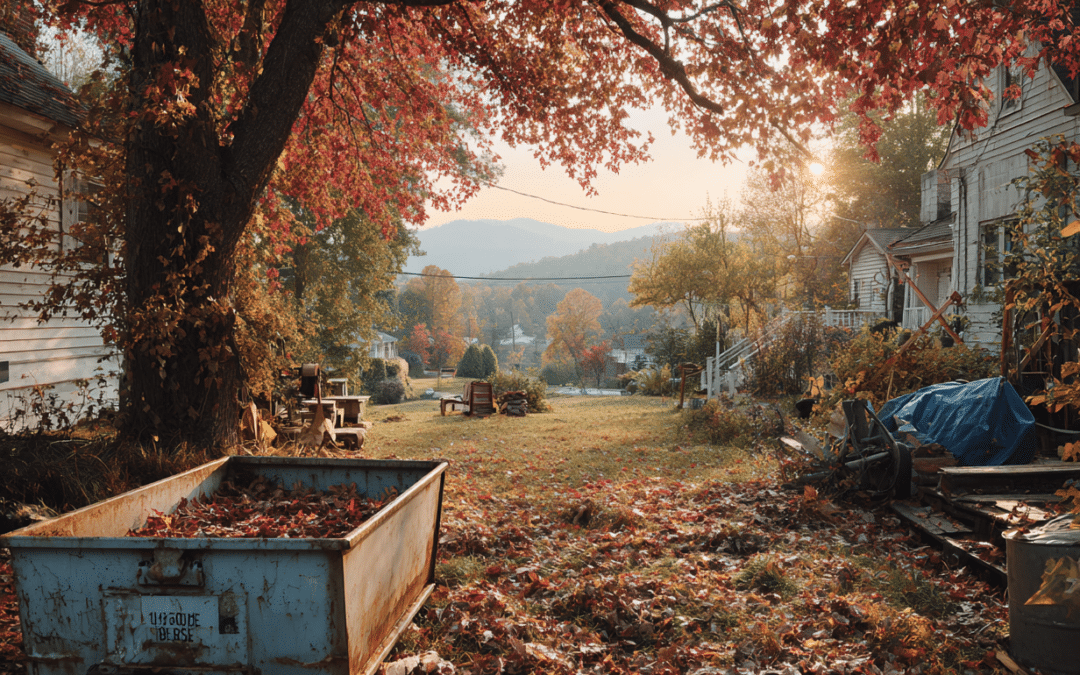
There’s a particular kind of beauty to fall in the Blue Ridge Mountains. The maples turn red along the Parkway, the hickories blaze yellow against the gray skies, and for a few magnificent weeks, Western North Carolina looks like a postcard. Then the leaves drop. And drop. And drop. By the time the trees are bare, the yards in Asheville, Hendersonville, Waynesville, and every community in between are buried in a knee-deep blanket of autumn debris.
That’s only the beginning. Add in fallen branches from windy nights, brush from late-season pruning, the inevitable storm debris that comes with mountain weather patterns, and a yard cleanup project can quickly outgrow whatever the curbside program is willing to take. At All-In Dumpster Rentals, we’ve helped countless WNC homeowners handle their fall yard cleanup the smart way. Here’s how to plan yours.
Why Fall Cleanup in WNC Is a Different Animal
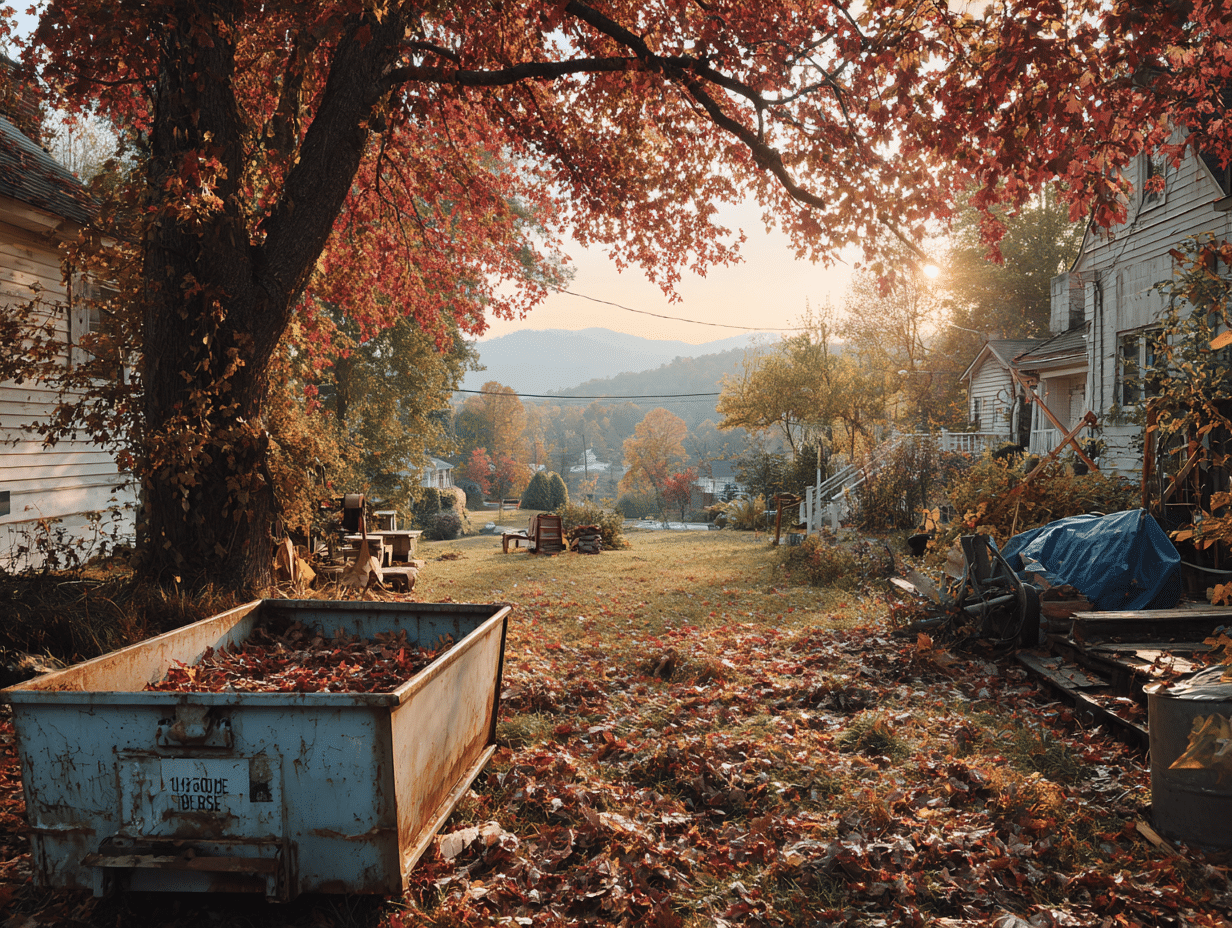
In flatter parts of the country, fall yard cleanup means raking leaves and bagging them for pickup. In the Blue Ridge, the math is different. Properties tend to be larger. Mature hardwoods drop more leaves than suburban species. Storm debris is more common, especially after the kind of severe weather events that have become more frequent in recent years. And the curbside programs that work in flatter regions often don’t extend up the mountain roads or into the more rural stretches of the service area.
The result is that fall cleanup in this region produces a volume of yard waste that genuinely needs a dumpster, not a stack of paper leaf bags. Knowing that up front lets you plan accordingly instead of scrambling halfway through the season.
What Counts as Yard Waste
For most homeowners, fall cleanup includes some combination of:
- Fallen leaves (often the largest volume by far)
- Branches and small limbs
- Brush from late-season pruning
- Storm debris from windy or wet days
- Old garden beds being cleared for winter
- Annual flowers and dead vegetation
- Pumpkins and other seasonal decorations
- Christmas trees, eventually, if you’re tackling a late fall and early winter cleanup together
The mix of materials varies based on your property, your landscaping, and what kind of weather the season delivers. Big oak and hickory drop heavily, while pine sheds needles steadily across the year. Mature properties with established trees produce more yard waste than newer landscapes.
Sizing Your Dumpster for Fall Cleanup
For most residential fall cleanup projects, our 10-yard dumpster handles the typical workload. Properties with multiple mature hardwoods, larger lot sizes, or significant storm debris may need to step up to 13 or 15 yards.
Here’s a rough guide:
10-yard dumpster: Average suburban lot with moderate leaf load. Fits most quarter-acre and half-acre properties in town.
13-yard dumpster: Larger lots, multiple mature trees, or properties combining leaf cleanup with brush from pruning projects.
15-yard dumpster: Multi-acre properties, properties with extensive landscaping, or cleanups following major storm events.
If you’re between sizes, sizing up is almost always cheaper than discovering you’ve outgrown the bin and need a second one mid-project.
Permitted Yard Waste
We accept the broad range of organic yard material that fall cleanup produces, including:
- Leaves (loose or bagged)
- Small branches and limbs
- Brush from pruning
- Dead plants and flowers
- Sod and grass clippings
- Pumpkins and seasonal decorations
- Untreated wood from yard projects
The volume of leaves alone can be impressive. A typical 10-yard dumpster can hold the leaf output of several mature trees, which is usually plenty for a single residential cleanup weekend.
What We Cannot Take
Some yard-related items don’t belong in our dumpsters even though they came from your yard:
- Large stumps and root balls (these need specialized disposal)
- Concrete from old garden borders or steps
- Bricks and stones from landscaping
- Dirt or fill (subject to specific rules)
- Pressure-treated lumber (technically allowed in small quantities, but ask first)
- Pesticides, herbicides, or any liquid yard chemicals
If your fall project includes stumps, large rocks, or significant amounts of soil, give us a call before booking. We can usually help you figure out the right disposal path for those items even when they don’t fit in our standard containers.
The Storm Debris Question
Western North Carolina’s weather patterns can deliver significant storm events outside of the major named storms. A strong cold front rolling through can drop limbs across your property in an afternoon. A wet snowstorm in late November can break branches that hold years of growth. The yard debris from these events adds quickly to your fall cleanup volume.
If you’re cleaning up storm damage along with your routine fall work, plan for a larger dumpster than you’d otherwise need. Storm debris is bulky, harder to pack down, and often comes with surprises (the snapped limb that was hiding a bird’s nest, the branch that brought down a section of fence).
Tips for Efficient Yard Cleanup
Some practical advice from successful cleanups we’ve watched:
- Time the cleanup right. Wait until most of the leaves have actually dropped, or you’ll be repeating the work. For most of WNC, mid-to-late October is the heart of the season, with peak cleanup typically happening between Halloween and Thanksgiving.
- Use a mulching mower for leaves on grass. This reduces volume significantly and feeds the lawn. Reserve the dumpster for what you can’t mulch in place.
- Tarp drag for distance. A heavy-duty tarp loaded with leaves drags faster than multiple wheelbarrow trips.
- Cut branches to fit. Branches up to about six feet pack better than longer pieces. If you’ve got big limbs, chainsaw them into manageable sections.
- Pack as you go. Don’t leave loose piles next to the dumpster overnight. Wind and weather will spread them.
- Layer leaves with branches. Leaves alone compress into corners. Layering with branches gives the load structure and uses the volume better.
Placement Around Yard Work
The ideal placement for a yard cleanup dumpster is somewhere central to the work areas. For most properties, that’s a corner of the driveway or a level pull-off near the main yard work. Avoid placing the dumpster directly on grass if you can; the weight can damage turf, especially on softer fall ground.
Our hook-lift trucks give us flexibility on placement, including on sloped driveways and properties with limited level ground. If you’ve got an unusual property layout, mention it when you call. We’ve worked around most situations.
Coordinating With Landscapers
If you’re working with a landscaping company for your fall cleanup, ask whether they include dumpster rental in their pricing. Some do, some don’t. Either approach can work; you just want to confirm the arrangement up front.
If the landscaper handles their own waste removal, you may not need a separate rental at all. If they don’t, you can book the dumpster directly and coordinate placement with their schedule. Many of our customers work with landscapers and arrange the rental themselves to keep costs lower.
Timing the Rental
Most fall yard cleanups happen over a weekend or two weekends, plus some midweek work. A standard rental window covers that timeframe comfortably. If you’re spreading the cleanup across a longer period, talk with us about scheduling so the rental matches your timeline.
Our hours run from 6:30 am to 7:00 pm, seven days a week. That schedule fits the way most folks actually do yard work, with early mornings and weekend afternoons being the popular windows.
A Quick Note on Curbside Programs
Most municipalities in Western North Carolina offer some form of yard waste collection, but the programs vary widely in what they take and how often they run. Some take loose leaves, others require bagging. Some accept branches, others don’t. Some run year-round, others only during peak seasons.
For light fall cleanup, curbside programs may handle the load. For anything more substantial, a dumpster is the more efficient option. The math usually works out in favor of the rental once you factor in the time spent bagging, the limits on what curbside will accept, and the multiple weeks it can take for everything to actually be hauled away.
Booking Your Fall Cleanup Dumpster
To set up your rental, call or text us at (828) 776-5517 or use our online booking form. We’ll talk through your property, the scope of your cleanup, and the timing that works best.
We serve Asheville and the surrounding communities of Buncombe, Henderson, Haywood, and Madison counties. Whether you’re tackling a small urban yard or a multi-acre property, we’ve got equipment and experience that fits.
Enjoy the Season, Skip the Hassle
Fall in the Blue Ridge deserves to be enjoyed, not endured. The right dumpster turns yard cleanup from a multi-week dragging chore into a focused weekend project. You spend less time hauling and more time sipping a hot drink on the porch, watching the last leaves drift down.
All-In Dumpster Rentals is your local, family-owned partner for fall cleanup across Western North Carolina. Call or text (828) 776-5517 to schedule your delivery, or book online any time. Let us handle the haul-away so you can get back to enjoying what fall in the mountains is all about.