

Key Takeaways
Concrete is one of the heaviest materials a dumpster can carry, and booking the right roll-off dumpster for concrete removal in Asheville NC means understanding weight limits, approved sizes, and what the local disposal process actually looks like. Getting these details right upfront saves money and prevents costly overweight fees or rejected loads.
- Concrete loads require smaller dumpster sizes due to extreme weight per cubic yard — typically 10-yard containers are the right fit.
- Most roll-off dumpsters have weight limits between 1 and 5 tons; concrete can hit those limits fast with only a partial load.
- Mixed loads of concrete with lighter debris are generally accepted, but hazardous materials mixed in are not.
- Asheville-area homeowners and contractors can rent a concrete-rated dumpster for projects ranging from patio removal to full foundation demolition.
- Booking early and communicating your debris type helps ensure the right container is reserved and delivered on time.
- All in Dumpster Rentals serves Buncombe, Henderson, Haywood, and Madison counties for concrete removal projects of all sizes.
Why Concrete Removal Requires a Different Dumpster Approach
Concrete debris is not like general household junk. A single cubic yard of cured concrete weighs roughly 4,000 pounds, which means even a partially filled dumpster can exceed weight limits that apply to standard mixed-debris loads. Homeowners in Asheville NC who are removing a driveway, sidewalk, patio slab, or retaining wall need to factor this weight density into their rental choice before a single piece of concrete hits the container. Choosing the wrong size or ignoring weight thresholds can result in overage charges that range from $50 to $100 or more per ton over the limit, depending on the rental agreement. Understanding how concrete behaves as a waste material, and which containers are built to handle it, is the first step toward a smooth project and a predictable total cost. For more information on concrete properties and disposal, see the U.S. Environmental Protection Agency. Reviewing how to avoid overage charges in Asheville before you book can help you set realistic expectations for your budget.
What Size Roll-Off Dumpster Works Best for Concrete in Asheville?
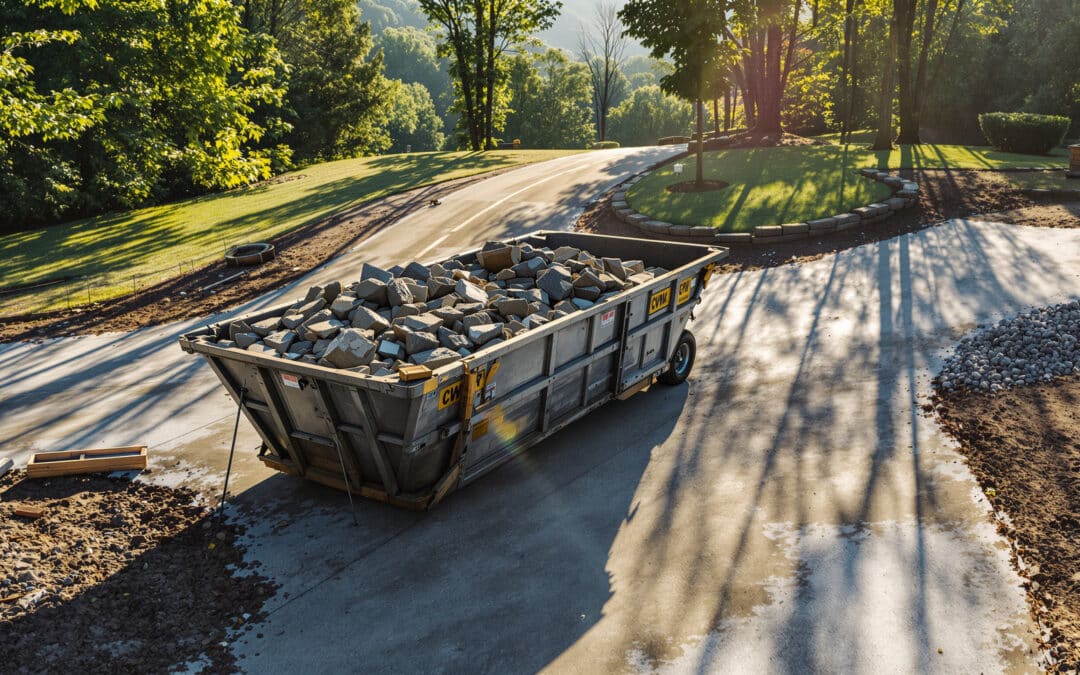
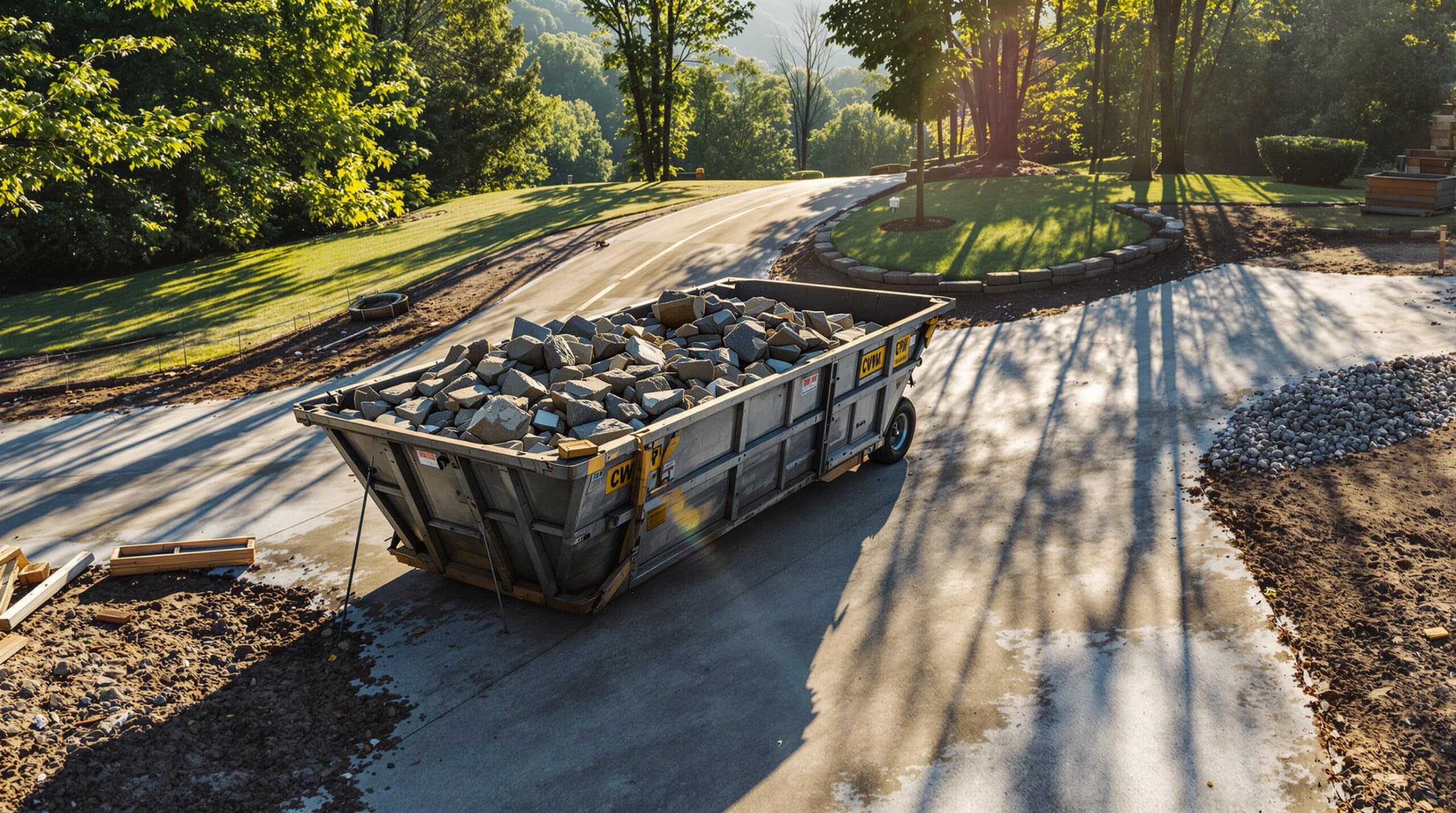
For concrete removal projects in Asheville NC, a 10-yard roll-off dumpster is the most commonly recommended container size. Concrete’s high weight density means that a larger container, such as a 20-yard or 30-yard dumpster, would hit its weight limit long before the bin is physically full. Filling a 20-yard dumpster even halfway with solid concrete slabs can exceed the 4-to-5-ton weight cap that most containers carry, which triggers per-ton overage fees and can complicate pickup logistics on narrow residential streets.
Can I use a 10-yard dumpster for a full driveway removal?
A standard two-car driveway removal typically generates between 6 and 12 cubic yards of broken concrete, but that volume is not the limiting factor. Weight is. A 10-yard dumpster filled entirely with concrete can weigh 8,000 to 10,000 pounds or more, which may already approach the container’s rated limit. For larger driveway or foundation projects, ordering two separate 10-yard pulls is often more cost-effective than one oversized container that racks up overage charges. Contractors handling full foundation pours or thick commercial slabs should plan for multiple hauls accordingly.
Are 20-yard dumpsters ever appropriate for concrete?
A 20-yard dumpster can work for concrete removal when the load is a mix of concrete and lighter materials such as dirt, wood framing, or drywall. In mixed-load scenarios, the lighter materials offset the weight density of the concrete, allowing the larger container to stay within its weight ceiling. However, for loads that are predominantly solid concrete, especially pieces thicker than four inches, a 10-yard container is the safer and more economical choice. You can review the full breakdown of available container dimensions at the roll off dumpster sizes Asheville NC page to match your specific project scope.
What about small residential concrete jobs?
Removing a single sidewalk panel, a small set of concrete steps, or a section of patio flooring may generate only 1 to 3 cubic yards of debris. Even in these smaller jobs, the weight of the material can approach 6,000 to 12,000 pounds total, which makes a 10-yard dumpster the right fit rather than a 5-yard mini container. Mini containers are not rated for pure concrete loads in most cases. When in doubt, describe the dimensions of the slab you are removing when you call, and the team can give you a precise recommendation based on your project’s scope. A guide to how big of a dumpster you need can also help you think through the right container before you call.
Understanding Weight Limits and Overage Fees for Concrete Loads
Weight limits are the most important financial consideration when renting a roll-off dumpster for concrete removal in Asheville NC. Every rental agreement specifies an included tonnage, typically ranging from 1 to 5 tons depending on container size and the rental company’s pricing structure. Concrete is consistently one of the materials most likely to push loads beyond those thresholds because its weight is invisible until the truck tries to lift the container.
How much does a ton of concrete actually look like?
One ton of concrete equals roughly 2,000 pounds, which is approximately half a cubic yard of broken slab material. If a homeowner is removing a 200-square-foot patio that is four inches thick, that project generates roughly 2.5 cubic yards of concrete, which translates to close to five tons of debris. That volume fits easily inside a 10-yard dumpster physically, but it can exceed the included tonnage by two or three tons, resulting in overage fees that can add $150 to $300 to the final bill depending on the rate structure. Calculating the square footage and thickness of the concrete before calling is the single most effective way to get an accurate quote. You can also explore transparent dumpster rental pricing in Asheville to understand exactly how tonnage tiers affect your final cost.
What happens if my dumpster goes over the weight limit?
When a dumpster is flagged as overweight at the disposal facility, the driver may not be able to complete the haul without additional paperwork or load redistribution. In practice, the rental company contacts the customer, applies per-ton overage fees to the invoice, and in some cases a second haul is required to remove the excess material. Overweight loads can also pose safety risks on Asheville’s hilly terrain, particularly on residential driveways with tight turnaround space. Communicating the full scope of the concrete removal project at the time of booking helps avoid all of these scenarios.
Are weight limits negotiable for concrete-specific rentals?
Some rental companies offer concrete-specific or heavy-debris pricing tiers that include a higher base tonnage allowance. These tiers are priced differently from standard mixed-debris rentals and are worth asking about when booking. The tonnage included and the per-ton overage rate are the two numbers that most directly affect total project cost, so asking about both during the reservation call is a practical step every renter should take.
What Concrete and Masonry Materials Are Accepted?
Most roll-off dumpsters accept a wide range of concrete and masonry debris, but the specific condition of the material and what it is mixed with can affect whether a load is accepted at the disposal or recycling facility. Knowing what goes in and what stays out prevents rejected loads and keeps the project on schedule. Learn more about construction waste management standards from OSHA and debris disposal best practices.
What types of concrete are accepted in a roll-off dumpster?
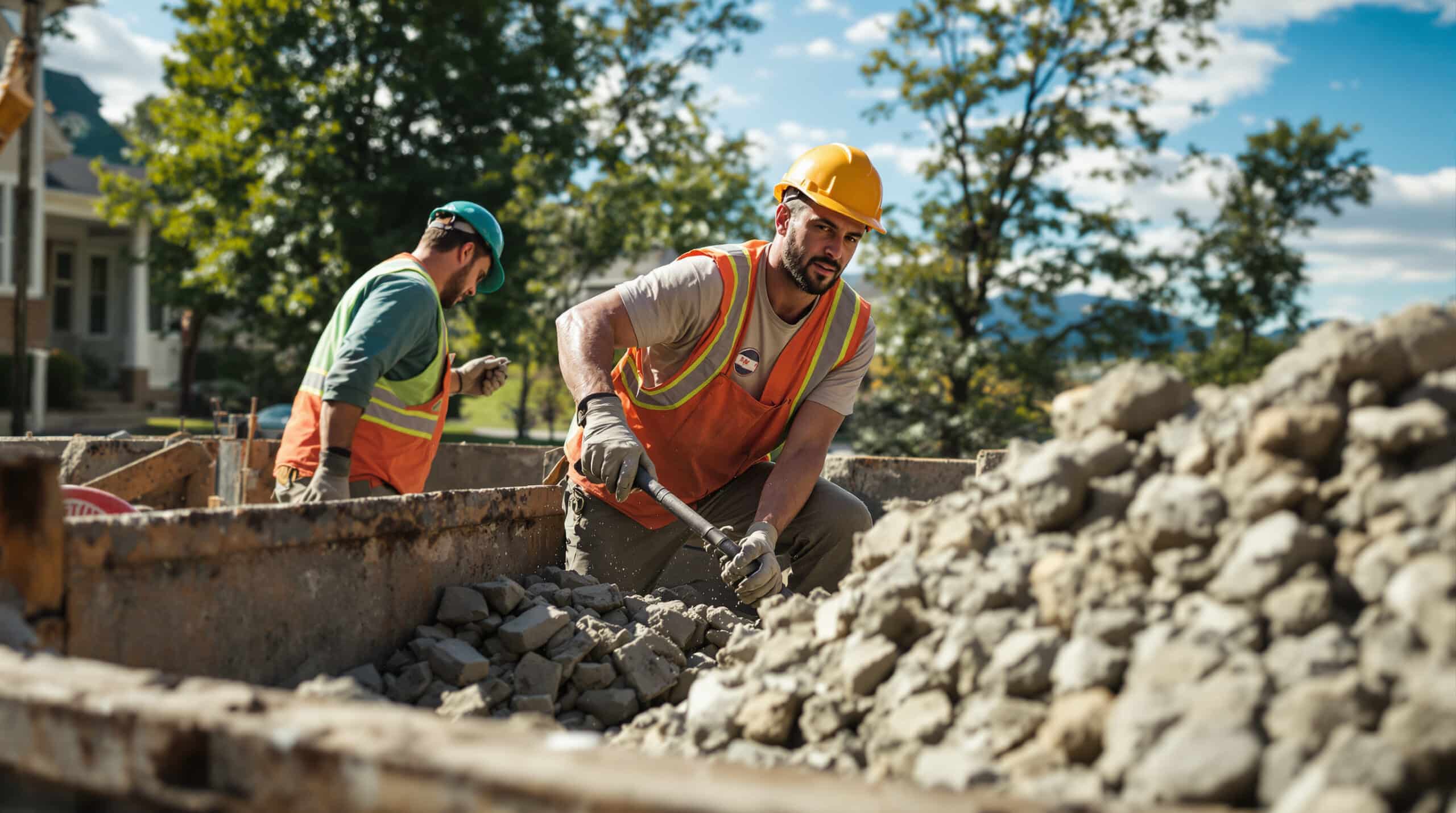
Broken concrete from driveways, sidewalks, patios, foundation walls, retaining walls, and decorative flatwork is generally accepted. Concrete masonry units such as cinder blocks, pavers, brick, and stone are also accepted in most cases. Rebar-embedded concrete is accepted as well, although facilities that crush and recycle concrete may charge a slight premium for rebar-laced material because it requires additional sorting. Mortar, grout, and tile set on concrete backer board are typically allowed in mixed loads.
What materials cannot go into the dumpster with concrete?
Hazardous materials are prohibited regardless of what other debris is in the container. Asbestos-containing materials, which can be found in older concrete coatings or floor tiles bonded to concrete slabs in homes built before 1980, require separate disposal through a licensed hazardous waste handler. For information on asbestos and other hazardous materials, consult the National Institutes of Health. Paint cans, solvents, fuel containers, and chemicals cannot be mixed with concrete in a standard roll-off dumpster. If there is any possibility that a slab or wall contains asbestos, consult asbestos documentation or contact a certified abatement professional before proceeding with removal.