
Understanding Dumpster Sizes: More Than Just Numbers

Choosing the wrong dumpster size is one of the fastest ways to blow your project budget or cause delays you didn’t plan for. Order too small, and you’re either paying overage charges or scheduling a second rental. Order too large, and you’re spending money on capacity you’ll never use—not to mention potentially violating HOA rules or taking up more driveway space than your family can afford to lose for a week.
Here in Western North Carolina, we see this confusion play out regularly. A homeowner in Asheville starts a garage cleanout thinking a 10-yard will be plenty, only to realize halfway through that thirty years of accumulated belongings won’t fit. Or a contractor in Henderson County orders a 30-yard for a small bathroom remodel and ends up with a half-empty bin sitting in the driveway.
The good news? Selecting the right size isn’t complicated once you understand how dumpster sizes actually work and what your specific project will generate in terms of volume and weight.
Standard Dumpster Sizes and What They Actually Hold

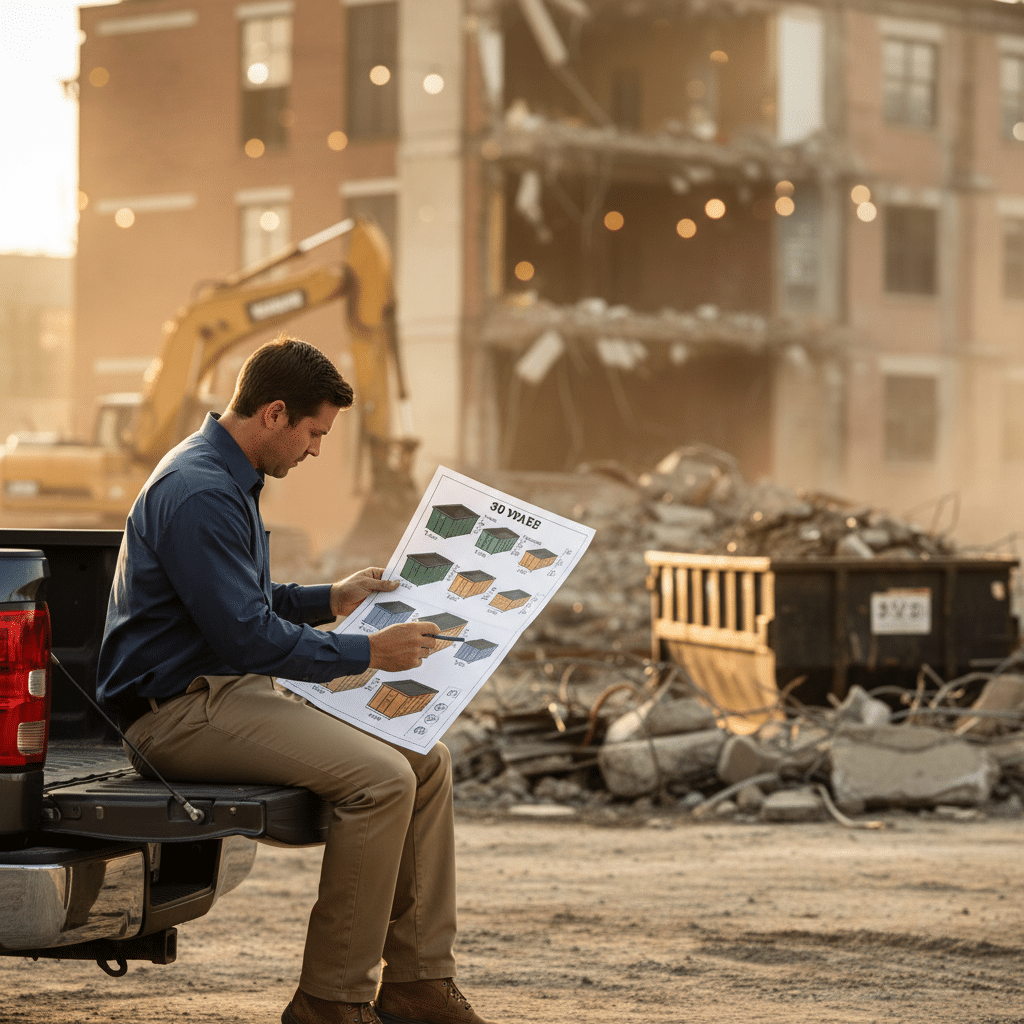
Roll-off dumpsters are measured in cubic yards, which refers to the volume of material they can hold—not the physical footprint. A 10-yard dumpster doesn’t mean it’s 10 yards long. It means it holds 10 cubic yards of debris, roughly equivalent to three pickup truck loads.
Here’s the realistic breakdown of standard sizes and their common applications:
10-Yard Dumpsters
Dimensions: Typically 12-14 feet long, 7-8 feet wide, and 3-4 feet tall.
Capacity: About 3-4 pickup truck loads.
Best for: Small bathroom remodels, garage cleanouts, minor landscaping projects, deck removal (small decks only), or clearing out a single room. If you’re decluttering an estate in Buncombe County and focusing on one or two rooms, this size usually works well.
Weight limit: Generally 2-3 tons, though this varies by hauler and material type.
15-Yard Dumpsters
Dimensions: Around 14-16 feet long, 7-8 feet wide, and 4-5 feet tall.
Capacity: Roughly 4-6 pickup truck loads.
Best for: Medium-sized renovation projects like kitchen remodels, flooring removal from multiple rooms, medium deck removal, or significant garage and basement cleanouts. This is the size we recommend most often for homeowners in Haywood County doing whole-room renovations.
Weight limit: Typically 2-3 tons.
20-Yard Dumpsters
Dimensions: About 20-22 feet long, 7-8 feet wide, and 4-5 feet tall.
Capacity: Approximately 8 pickup truck loads.
Best for: Whole-home cleanouts, large renovation projects, roof replacements (for smaller homes), carpet and flooring removal from entire houses, or substantial landscaping overhauls. Contractors working on multi-room projects around Madison County often find this the sweet spot between capacity and cost.
Weight limit: Usually 3-4 tons, but roofing materials can max this out quickly.
30-Yard Dumpsters
Dimensions: Typically 20-22 feet long, 7-8 feet wide, and 6-7 feet tall.
Capacity: About 12 pickup truck loads.
Best for: Major home additions, new construction projects, large-scale demolition, commercial cleanouts, or roof replacements on larger homes. If you’re a contractor managing a significant teardown or addition in the Blue Ridge Mountains area, this size prevents the hassle of multiple hauls.
Weight limit: Generally 3.5-5 tons, depending on your waste hauler’s specifications.
40-Yard Dumpsters
Dimensions: Around 20-22 feet long, 7-8 feet wide, and 8 feet tall.
Capacity: Roughly 16-20 pickup truck loads.
Best for: Large commercial projects, complete home demolitions, major construction sites, or industrial cleanouts. Residential customers rarely need this size unless they’re tearing down an entire structure.
Weight limit: Typically 5-6 tons, though restrictions apply based on material type.
Matching Your Project Type to the Right Size
Project type matters more than square footage alone. Different jobs generate vastly different volumes and weights of debris, even when they affect similar-sized spaces.
Renovation and Remodeling Projects
Kitchen remodels generate cabinets, countertops, appliances, drywall, and flooring—bulky but often manageable in a 15-yard or 20-yard dumpster. Bathroom renovations are typically smaller but generate heavy materials like tile, fixtures, and cast iron tubs. A 10-yard dumpster often works for a single bathroom, but if you’re doing two bathrooms simultaneously, jump to a 15-yard.
Whole-house renovations require careful estimation. Multiply the number of rooms by expected debris volume, then add 20% as a buffer. Most full-home interior renovations in Western North Carolina fit comfortably in a 20-yard or 30-yard dumpster.
Roofing Projects
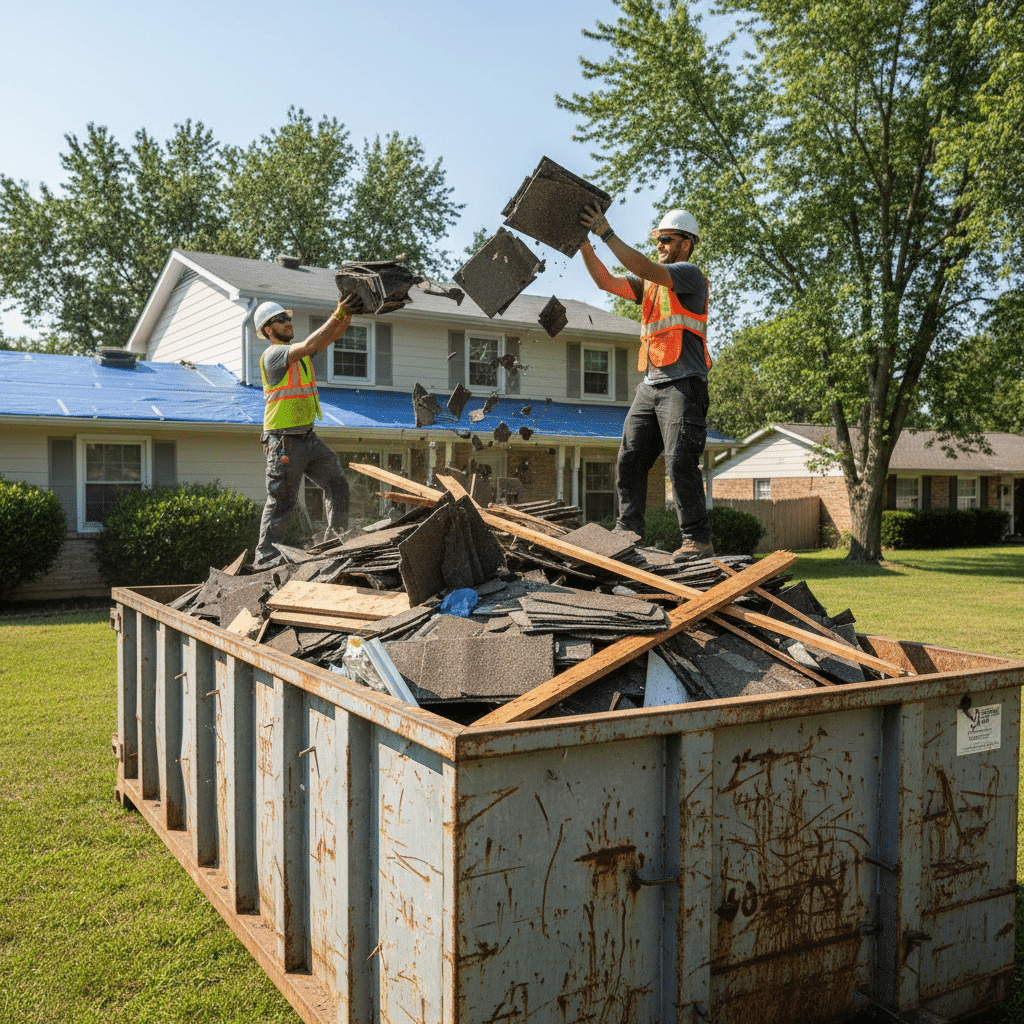
Roofing materials are dense and heavy. Asphalt shingles weigh significantly more per cubic yard than household junk or construction debris. A standard roof replacement on a 2,000-square-foot home generates roughly 3-5 tons of old shingles and underlayment.
For most residential roofs, a 20-yard dumpster works well. Larger homes or properties with multiple layers of old shingles may require a 30-yard. Keep in mind that weight limits matter more here than volume—you might fill only half the dumpster but hit your weight cap.
Cleanouts and Decluttering
Estate cleanouts, hoarding situations, and whole-home decluttering projects are harder to estimate because the volume varies wildly. A house that looks moderately full can yield shocking amounts of debris once you start emptying closets, attics, and basements.
Start with a 15-yard if you’re clearing a typical three-bedroom home’s worth of belongings. For larger properties or situations where decades of accumulation are involved, a 20-yard or even 30-yard may be necessary. As your neighbors serving communities across Buncombe and Henderson counties, we’ve seen situations where homeowners needed two separate rentals because the volume exceeded all expectations.
Landscaping and Yard Waste
Brush, branches, soil, sod, and general yard waste are bulky but often light. A 15-yard or 20-yard dumpster handles most residential landscaping projects comfortably. If you’re removing trees, stumps, or doing major land clearing, you may need a 30-yard.
One caution: dirt, sod, and concrete are extremely heavy. If your project involves significant amounts of these materials, confirm weight limits with your rental provider upfront. You may hit tonnage limits well before you fill the bin.
Construction and Demolition
New construction generates lumber scraps, drywall offcuts, packaging materials, and general job site waste. A 20-yard or 30-yard dumpster is standard for most residential builds. Full demolitions—tearing down walls, removing fixtures, pulling up subfloors—require 30-yard or 40-yard bins depending on the structure size. Learn more about comparing different dumpster sizes. Learn more about Western NC dumpster sizing guide. Learn more about efficient loading strategies. Learn more about dumpster rental pricing factors. Learn more about 10-yard container benefits. Learn more about comprehensive dumpster size guide. Learn more about complete dumpster sizing guide.
Contractors working on multi-phase projects often benefit from scheduling multiple smaller dumpsters rather than one oversized bin. This prevents the dumpster from becoming a semi-permanent fixture and allows for better job site organization.
Why Weight Matters as Much as Volume
Dumpster pricing includes a weight allowance, typically measured in tons. Exceed that allowance, and you’ll pay overage charges—often $50 to $100 per additional ton, depending on your location and hauler.
Common materials and their approximate weights:
- Asphalt shingles: 50-80 pounds per bundle; a typical roof generates 2-5 tons total
- Drywall: Roughly 500-800 pounds per cubic yard
- Concrete and brick: Extremely heavy at 2,000-3,000 pounds per cubic yard
- Wood and lumber: About 300-500 pounds per cubic yard
- Household junk and furniture: Varies widely, averaging 200-400 pounds per cubic yard
- Dirt and soil: 2,000-3,000 pounds per cubic yard when compacted
If your project involves primarily heavy materials like concrete, roofing debris, or dirt, discuss this upfront with your rental company. They may recommend a smaller dumpster with a higher weight allowance, which can save money compared to renting a larger bin you’ll never fill volumetrically.
Practical Estimation Tips from the Field
Estimating debris volume isn’t an exact science, but these methods help you get close:
The pickup truck method: Visualize how many pickup truck loads your debris would fill. Most standard pickup beds hold about 2-3 cubic yards when loaded level with the bed rails. A 10-yard dumpster equals roughly three to four truck loads. A 20-yard equals about eight loads.
The room calculation: For cleanouts, estimate one cubic yard of debris per room for light decluttering, two to three cubic yards per room for moderate cleanouts, and four to six cubic yards for heavy hoarding or estate situations. This isn’t perfect, but it gives you a starting baseline.
The material stack method: If you’re removing specific materials like flooring or drywall, calculate the total square footage and research typical debris volumes for that material. For example, removing carpet and padding from 1,000 square feet generates roughly 1.5-2 cubic yards of compacted debris.
Add a buffer: Whatever your initial estimate, add 15-20%. Projects almost always generate more debris than anticipated once you account for packaging, unexpected discoveries, and materials that don’t compress as much as you’d hoped.
Considering Your Property and Access
Dumpster size isn’t just about capacity. You need physical space to place the container and access for the delivery truck.
Standard roll-off delivery trucks need at least 10-11 feet of width for safe placement and roughly 60-75 feet of straight-line access (including overhead clearance for power lines). If you’re in a neighborhood with narrow driveways, mature tree canopies, or steep mountain terrain common around Western North Carolina, discuss placement options before finalizing your size choice.
A 30-yard or 40-yard dumpster is significantly taller than a 10-yard or 15-yard. If your driveway has low-hanging branches, utility lines, or tight turning radius, the smaller physical footprint of a 15-yard or 20-yard might be necessary even if your debris volume suggests going larger.
HOA restrictions sometimes limit dumpster size or placement duration. Check your community rules before ordering, especially in neighborhoods around Asheville or planned developments in Buncombe County where regulations can be strict.
Cost Considerations and How Size Affects Pricing
Dumpster rental pricing in Western North Carolina typically ranges from $300 to $800 depending on size, rental duration, debris type, and distance from the hauler’s location. Smaller dumpsters cost less upfront, but ordering two small bins because you underestimated will cost significantly more than renting the right size initially.
A 10-yard dumpster might run $300-$400 for a week-long rental with a 2-ton weight limit. A 20-yard typically costs $400-$550 with a 3-ton limit. A 30-yard might be $500-$700 with a 4-ton allowance. Overage fees for exceeding weight limits often add $60-$100 per ton.
Running the math, if you’re unsure between a 15-yard and 20-yard, the price difference is usually $50-$100. Compare that to the cost of scheduling a second rental mid-project ($300+) or paying overage fees for cramming too much into an undersized bin. The larger size is almost always the smarter financial choice when you’re on the fence.
Special Considerations for Different Material Types
Not all debris is created equal, and some materials have specific requirements that affect size selection.
Hazardous and Prohibited Materials
Most dumpster rentals prohibit hazardous materials like paint, chemicals, asbestos, tires, batteries, and certain electronics. These items require separate disposal methods and won’t count toward your dumpster capacity. Plan alternative disposal for these materials before selecting your dumpster size.
Heavy Materials
Concrete, brick, dirt, and roofing shingles require special attention. Some haulers offer dedicated “heavy debris” dumpsters with lower volume but higher weight allowances. If more than 50% of your debris consists of these materials, ask about heavy material pricing and container options.
Bulky but Light Materials
Furniture, mattresses, and packaging materials take up significant space but weigh relatively little. For these projects, you’ll likely max out volume before hitting weight limits. Size up accordingly—a furniture-heavy estate cleanout might need a 20-yard even though the weight would fit in a 10-yard.
Talking to Your Rental Provider: Questions to Ask
A good dumpster rental company helps you right-size your order. When you call, be ready to describe:
- Your specific project type and scope
- The materials you’ll be disposing of
- Approximate square footage or room count
- Any heavy materials like concrete, shingles, or dirt
- Your property access and placement constraints
- Your timeline and how long you’ll need the dumpster
Ask your provider:
- What size they recommend based on your description
- What the weight allowance includes and what overage charges cost
- Whether they offer size exchanges if you realize mid-project you need something different
- What materials are prohibited or require special handling
- Whether delivery and pickup are included or charged separately
At All-In Dumpster Rentals, we’ve helped countless local homeowners and contractors in Asheville, Henderson County, Haywood County, and Madison County match their projects to the right dumpster size. The conversation usually takes five minutes and prevents costly mistakes down the road.
When to Size Up vs. When to Stay Small
Size up when:
- You’re unsure and stuck between two sizes
- Your project scope might expand once you start tearing into walls or clearing spaces
- You’re dealing with bulky materials that don’t compress well
- You’d rather have extra space than risk overfilling
- Multiple people are contributing debris and coordination is loose
Stay smaller when:
- Your project scope is tightly defined and unlikely to change
- You’re experienced with similar projects and confident in your estimate
- Space constraints make larger dumpsters impractical
- You’re working with primarily heavy materials where weight limits matter more than volume
- Budget is extremely tight and you’re willing to manage debris carefully to avoid overfilling
What Happens If You Choose Wrong
If you underestimate and run out of space, most rental companies let you schedule a pickup and swap or add a second dumpster. Expect to pay for the additional haul and rental period. This typically costs 60-80% of a full new rental since you’re already an active customer.
If you overestimate and have excess capacity, you’ve spent more than necessary but avoided the delays and hassle of running out of space mid-project. Most contractors and experienced homeowners prefer this outcome—the cost difference between sizes is usually modest compared to the value of project continuity.
The worst scenario is overfilling a dumpster beyond the fill line. This creates safety hazards during transport, may violate local regulations, and often results in the hauler refusing to pick up until you remove excess material. Some companies charge additional fees for overfilled containers.
Regional Factors in Western North Carolina
Here in Western North Carolina, certain factors affect dumpster selection more than in other regions. Mountain terrain means some properties have access challenges that limit size options. Seasonal considerations—like heavy leaf debris in fall or storm cleanup after winter weather—can affect volume estimates.
Local disposal facilities and transfer stations have varying fee structures that rental companies pass along to customers. Material type sometimes matters more here than in urban areas with larger, more diverse waste processing infrastructure.
Weather delays are common in the Blue Ridge Mountains. If you’re renting during winter months or spring storm season, consider that your rental period might extend beyond planned timelines. A slightly larger dumpster gives you flexibility if weather slows your project pace.
Final Thoughts on Right-Sizing Your Rental
Choosing the right dumpster size comes down to honest assessment of your project scope, material types, and space constraints. When in doubt, go one size larger—the cost difference is minimal compared to the hassle and expense of running out of capacity mid-project.
Whether you’re tackling a bathroom remodel in Asheville, clearing an estate in Henderson County, or managing a construction project in Haywood County, taking ten minutes to properly estimate your debris volume saves time, money, and frustration. Work with choosing the right dumpster rental provider who knows the area, understands regional challenges, and can offer practical guidance based on experience with similar projects.
The last thing you want is an unexpected charge for overages or the delay of scheduling a second dumpster when you’re trying to meet a contractor timeline or get your home back in order. Size it right from the start, and your project flows smoothly from demolition to cleanup to completion.